
Vintage Matchbooks
Collector Quick Guide
What collectors look for
Original condition, age, maker marks, materials, completeness, unusual variants, and documented history usually matter most.
How to identify originals
Compare markings, construction details, finish, size, period-correct materials, and known design features before assuming authenticity.
Red flags / reproductions
Watch for reproductions, heavy restoration, replaced parts, fantasy pieces, unclear photos, and listings with vague descriptions.
Related collectibles
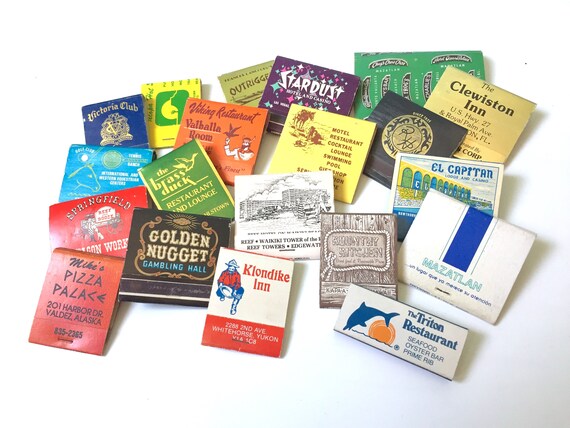
Vintage matchbooks are small, folded paperboard cases that contain a row of matchsticks, originally designed to be torn out and struck for fire. More than just utilitarian fire-starting tools, these matchbooks became widely adopted as advertising platforms during the early to mid-20th century. Businesses saw them as low-cost ways to place their branding directly into the hands—and pockets—of customers. Whether it was a local diner, luxury hotel, gas station, or airline, matchbooks were printed with bright, catchy artwork, logos, slogans, and promotional information. Their portability and visibility made them one of the most effective advertising formats of their time.
The golden era of matchbook advertising spanned from the 1920s through the 1960s. During this time, companies would distribute them in bulk, often giving them away at the cash register or placing them on tables in restaurants and bars. Many of these matchbooks featured stunning lithographed artwork, Art Deco-inspired typography, or risqué and humorous illustrations. They also doubled as mini-billboards for political campaigns, major events, tourist attractions, and even wartime propaganda. The artwork was not just decorative—it captured the social and cultural tone of its time, making matchbooks small but powerful windows into the past.
Right now on eBay
The collecting of matchbooks is known as phillumeny, and it has grown into a passionate subculture with thousands of enthusiasts worldwide. Some collectors focus on specific industries (like tobacco or casinos), while others seek matchbooks with rare misprints, embossed foil covers, or those from now-defunct businesses. Scarcity, condition, and theme all play roles in a matchbook's value. Unstruck matchbooks (where the matches remain unused) in excellent condition with vivid printing tend to command higher prices. Those from early eras or with unique artwork are especially prized. There's also a niche market for "feature matchbooks"—oversized or novelty matchbooks that stood out on countertops.
Although smoking's decline and increased safety regulations curtailed widespread use by the late 20th century, vintage matchbooks remain popular collectibles. They're often displayed in albums, framed art, or shadow boxes, appreciated for their historical charm and design aesthetics. In the world of advertising memorabilia, matchbooks offer a tangible connection to everyday life and commerce in the 20th century. For collectors, they represent not only a hobby but a curated archive of forgotten brands, regional stories, and mid-century marketing genius—each one striking a spark of nostalgia.