
Matchbox Lesney No.1 Road Roller
Collector Quick Guide
What collectors look for
Collectors value copies with sharp corners, a solid spine, vibrant cover colors, and clean pages. Professionally graded examples, especially those certified by CGC or CBCS, are highly sought after. When evaluating a raw copy, watch for spine ticks, detached staples, restoration, trimming, or color touch, as these can significantly impact value. Honest, unrestored copies are generally the most desirable.
How to identify originals
Compare markings, construction details, finish, size, period-correct materials, and known design features before assuming authenticity.
Red flags / reproductions
Watch for reproductions, heavy restoration, replaced parts, fantasy pieces, unclear photos, and listings with vague descriptions.
Related collectibles
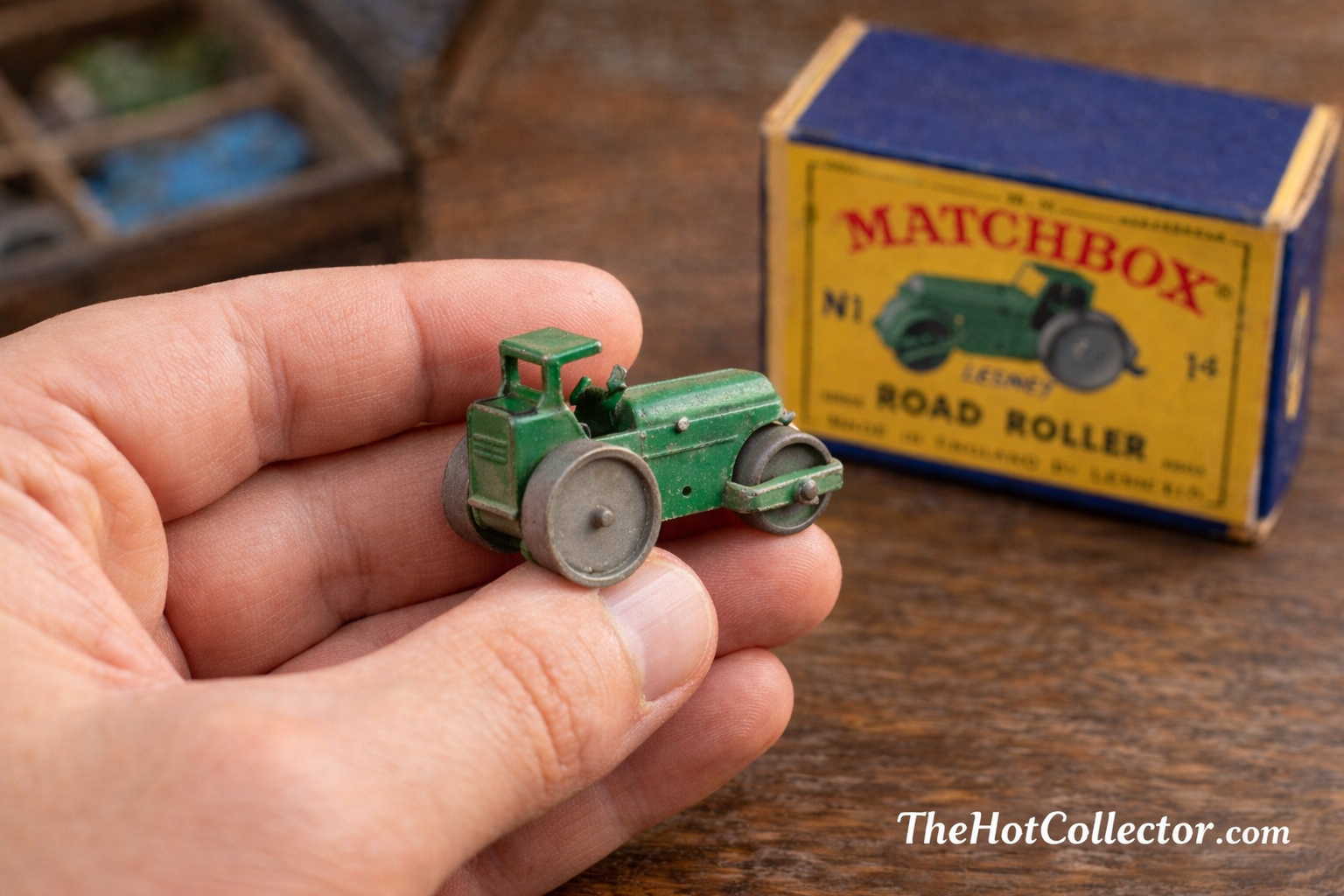
The Matchbox Lesney No.1 Road Roller is one of the most important toys in die-cast collecting history, marking the beginning of the famous Matchbox miniature vehicle line. Produced in 1953 by Lesney Products in England, the little green steam road roller was designed to fit inside a standard matchbox so a young girl could bring it to school under toy-size rules. That simple idea turned into one of the most successful toy lines ever created. Early versions were sold under the Moko Lesney label, and their modest size, metal construction, and realistic details helped launch Matchbox into global popularity during the postwar toy boom.
The first road rollers were made from die-cast metal with painted bodies and metal rollers, and they came in several subtle variations. Some had different shades of green, others featured gray rollers instead of bare metal, and early boxes had distinctive labels that collectors now study closely. These tiny details matter because they help identify production runs and rarity levels. Collectors often compare baseplate markings, wheel types, and paint tones to confirm authenticity, especially since the toy’s small size makes it easy for parts to be swapped or repainted.
Right now on eBay
When looking at one in person, pay attention to the paint and rollers. Repaints are common and usually easy to spot because the paint looks too glossy or pools around rivets. Original paint often shows gentle wear on edges where little hands pushed the toy along the floor. Watch for replacement rollers or modern screws where rivets should be, since restorers sometimes rebuild damaged toys. Boxes are another major factor; original early boxes with correct numbering and color bands can be worth as much as the toy itself because so few survived childhood play.
Collectors love the No.1 Road Roller not just because it’s old, but because it represents the birth of pocket-size realism in toys. It came from a time when postwar manufacturing was booming, metal toys were affordable, and children imagined entire construction sites on living-room carpets. For many collectors, finding one in a dusty box at an estate sale feels like touching the starting point of modern die-cast collecting. It’s a tiny object with a big story, and that connection to childhood and innovation keeps it at the top of many Matchbox wish lists.