
Chrome Icons of the Road: Collecting Antique Hood Ornaments
- Feb 2026
- Rigo
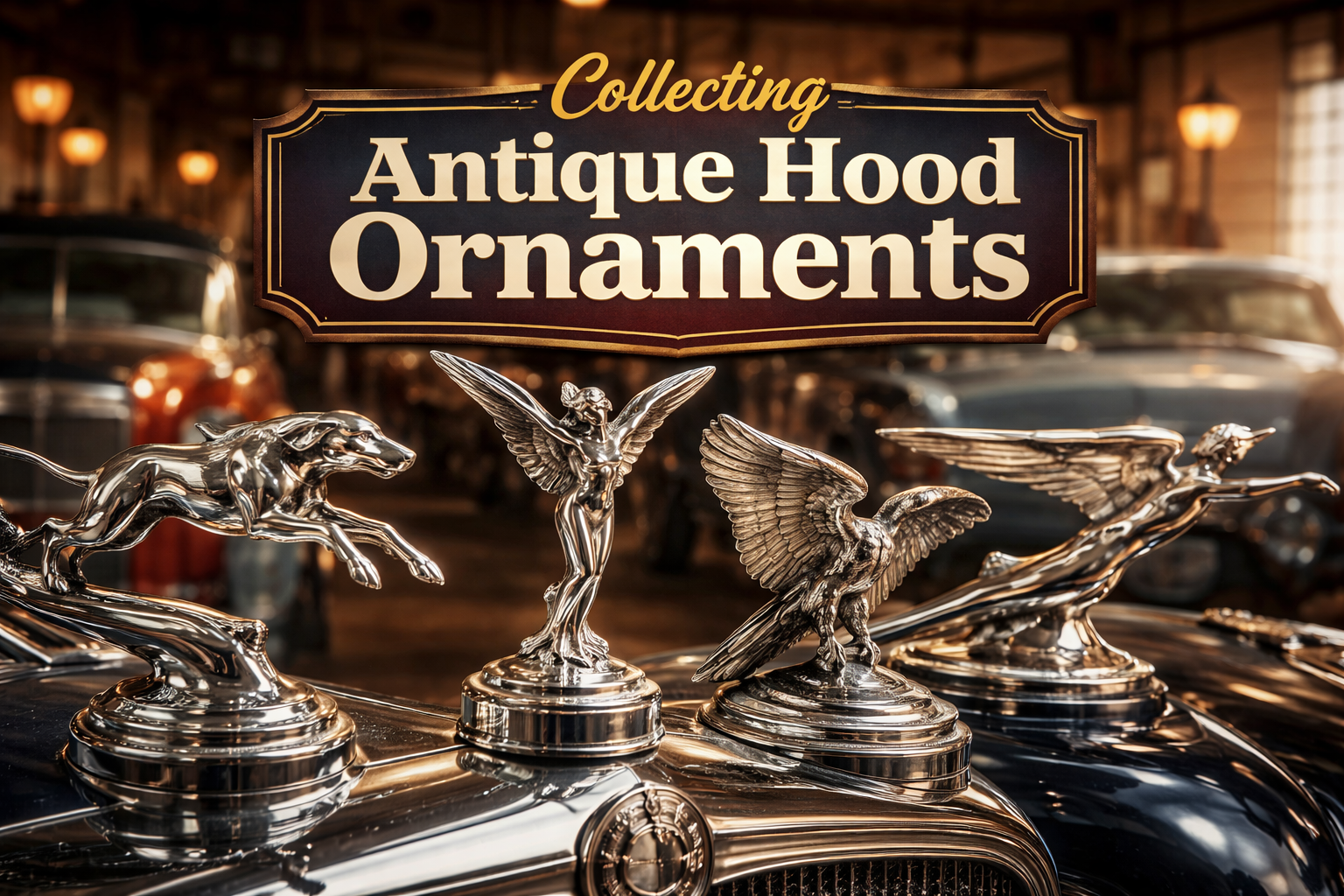
Long before dashboards were filled with screens and sensors, automobiles wore their personalities right out front. Hood ornaments—sometimes called  mascots or radiator caps—once crowned the noses of cars with gleaming sculptures that symbolized speed, luxury, power, or modern design. Today, these chrome and brass figures have become a favorite among transportation collectors, admired for their artistry and the era they represent.
Hood ornaments rose to prominence in the 1910s and 1920s, when automobiles shifted from purely practical machines into objects of style and social standing. Early cars often used simple radiator caps, but manufacturers and owners soon realized that a decorative figure could make a bold statement. Wings, eagles, goddesses, greyhounds, lions, and abstract Art Deco shapes appeared, each meant to suggest motion, prestige, or cutting-edge engineering. As car design evolved through the 1930s and 1940s, ornaments followed suit, growing sleeker and more streamlined to match aerodynamic body lines.
Collectors often gravitate toward pieces from the interwar years, when automotive styling reached a dramatic high point. Sculptors and industrial designers were frequently hired to create these small works of metal art, casting them in chrome-plated brass, bronze, or pot metal. Some were factory-issued by car makers, while others were aftermarket accessories sold through catalogs and dealerships, allowing drivers to personalize their vehicles long before bumper stickers existed.
What makes hood ornaments especially appealing is the mix of artistry and mechanical history packed into a compact object. Each one hints at the car it once topped and the driver who chose it. An aggressive bird might have adorned a performance-minded owner’s sedan, while a graceful female figure could have signaled elegance and status. Even abstract shapes tell a story, reflecting the futuristic optimism of the Machine Age.
Right now on eBay
Condition plays a major role in desirability. Original plating, sharp details, and intact mounting hardware are always preferred. Pitting, cracks, or heavy polishing can lower value, though some collectors appreciate light wear that shows honest age rather than restoration. Provenance adds another layer—ornaments that can be traced to a specific model, dealership accessory line, or period photograph often spark extra interest.
Many collectors build focused sub-collections. Some chase animal figures exclusively, lining shelves with chrome greyhounds and soaring birds. Others look for nautical themes, aviation-inspired designs, or the geometric forms associated with Art Deco styling. There are also enthusiasts who concentrate on aftermarket mascots, which can be just as inventive as factory pieces and sometimes even rarer.
Displaying hood ornaments has become part of the hobby itself. Since most are small enough for a desktop or display cabinet, collectors often mount them on wooden bases or acrylic stands, letting the polished metal catch the light. In garages and home workshops, they sometimes share space with license plates, enamel signs, and steering wheels, creating miniature shrines to early motoring culture.
Hood ornaments faded from everyday use after the mid-20th century as safety concerns and changing tastes reshaped car design, but that disappearance only heightened their appeal. They remain snapshots of a time when automobiles were bold, expressive, and meant to turn heads before they even started moving.
For collectors, these gleaming figures are more than decorative scraps from old vehicles. They are sculpted memories of the open road, industrial ambition, and the era when a car’s first impression was made by a shining figure leading the way.