
Collecting Vintage Die-Cast Cars
- Jul 2026
- The Hot Collector
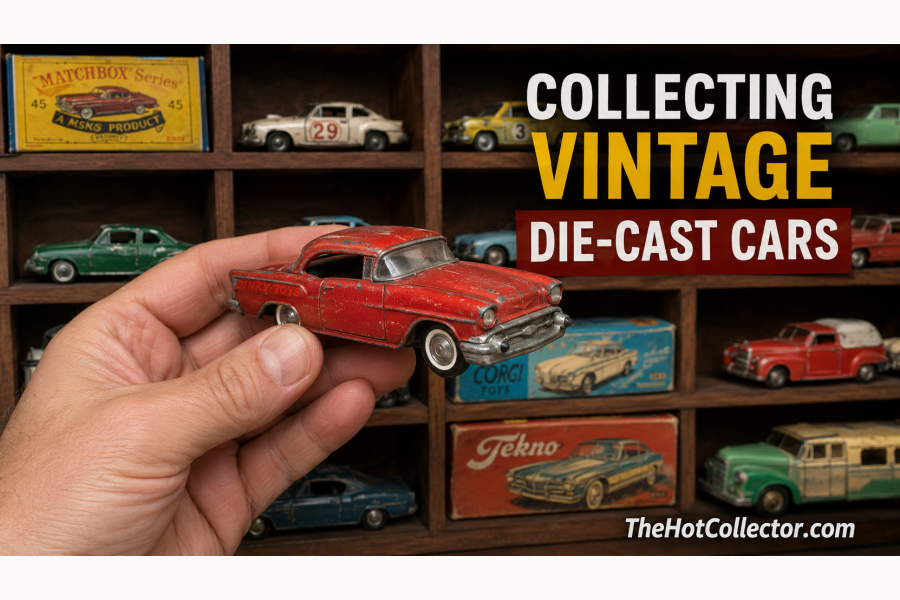
Have you ever walked past a box of old toy cars at a garage sale because they looked too beat up?
Most people do.
Collectors usually stop.
Vintage die-cast cars have been a favorite collectible for generations, and while the brightly colored models are fun to display, the real excitement comes from discovering one that has quietly survived for fifty or sixty years. Whether it's a tiny Matchbox tucked into an old cigar box or a Dinky Toys model sitting on a dusty shelf, each miniature car has its own story to tell.
Die-cast toy cars became wildly popular during the 1950s when companies like Lesney Products introduced the Matchbox line. Small enough to fit inside an actual matchbox, these toys quickly became a hit with children around the world. Soon after, companies like Dinky Toys, Corgi, Tekno, and Hot Wheels began producing detailed miniature vehicles that reflected the automobiles of their time. Today, those once-played-with toys have become serious collectibles.
One thing experienced collectors always check first is the paint. Chips and scratches are expected after decades of play, but original paint is usually far more desirable than a car that has been repainted. A shiny finish may look attractive, but if it isn't factory original, many collectors will pass.
Most Popular on eBay
Another area worth inspecting is the baseplate. Turn the vehicle over and look for the manufacturer, model number, and country of origin. Early Matchbox cars often have "Lesney England" cast into the bottom, while older Dinky models display their identifying numbers. These tiny markings can instantly tell you whether you're looking at a common toy or something much harder to find.
Don't overlook the wheels, either. Replacement wheels are common, especially on popular models. An experienced collector will compare the wheel style with reference books or original catalogs before deciding whether everything is factory correct.
One mistake new collectors often make is believing that the rarest cars always look perfect. That's simply not true. A slightly worn car with all of its original parts is usually more desirable than one that has been heavily restored. Honest play wear tells part of the toy's history. After all, these little cars were made for children, not museum shelves.
Many collectors enjoy building collections around a specific manufacturer, vehicle type, or even color. Some hunt only early Matchbox "Regular Wheels" models, while others specialize in emergency vehicles, construction equipment, or classic American cars. There isn't a wrong way to collect, and that's part of what keeps the hobby so enjoyable.
The next time you come across a small box of old die-cast cars at an estate sale or flea market, don't just glance inside and move on. Pick one up. Turn it over. Study the details. The little red sedan with chipped paint may have spent decades riding in a child's pocket before finding its way to your hands.
Sometimes the smallest collectibles leave the biggest impression.