
Beyond the Shine: What Makes Vintage Glass Worth Collecting?
- Jul 2026
- The Hot Collector
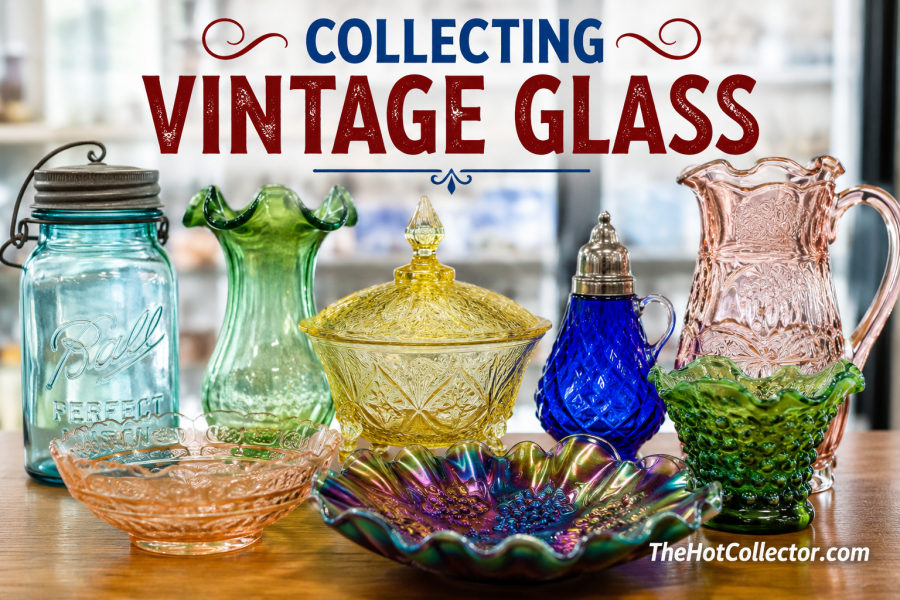
Walk into almost any antique mall and you'll eventually find a shelf glowing with colorful glass. Pink bowls, emerald green vases, cobalt blue pitchers, and delicate crystal dishes seem to catch the light from every direction. To someone new, they might all look equally valuable. Experienced collectors know otherwise.
One of the first lessons in collecting vintage glass is learning that color alone doesn't determine value. A beautiful blue vase might be worth twenty dollars while a simple clear piece sitting beside it could be worth several hundred. The difference usually comes down to the manufacturer, rarity, age, and condition.
Take  Depression Glass, for example. Produced primarily during the 1920s and 1930s, these colorful pieces were often given away with groceries, flour, or movie tickets. Millions were made, yet certain patterns and colors have become surprisingly difficult to find today. The history behind them is part of the appeal. Families held onto these dishes because replacing them wasn't easy during hard economic times, and many pieces have been handed down through generations.
When you're shopping at flea markets or estate sales, flip the piece over and take a close look at the base. Many manufacturers left behind subtle clues such as mold numbers, etched signatures, or polished pontil marks. Fenton Glass sometimes carries an identifying mark, while older pieces may require comparing shapes and patterns using collector reference books.
Here's one mistake many beginners make: holding the piece up quickly, saying "looks good," and putting it in the cart.
Slow down.
Run your finger gently around the rim. Tiny chips are often nearly invisible but can dramatically affect value. Hairline cracks can hide where a handle joins a pitcher or underneath decorative edges. Even a small repair can make a significant difference to experienced collectors.
Most Popular on eBay
Another fun part of the hobby is discovering just how many different types of collectible glass exist. Some collectors focus entirely on Carnival Glass, famous for its rainbow-like iridescent finish. Others spend years hunting for Uranium Glass, which glows a brilliant green under ultraviolet light. There are also devoted collectors of Milk Glass, Murano Glass, and elegant pressed glass patterns that decorated homes more than a century ago.
One thing that surprises many newcomers is that imperfections aren't always bad. Tiny bubbles trapped inside the glass or slight variations in thickness often show that a piece was produced using older manufacturing methods. Those characteristics can actually help support authenticity rather than hurt it.
If you're serious about collecting, carry a small LED flashlight in your pocket. Good lighting can reveal repaired cracks, hidden chips, and even signs of excessive polishing. It's a simple tool that many experienced collectors won't shop without.
Perhaps the biggest reason vintage glass remains so popular is that it combines beauty with history. Every serving bowl, vase, candy dish, or pitcher once belonged in someone's home. It may have sat on a holiday table, held flowers from a family garden, or been displayed proudly in a china cabinet for decades.
That's what makes this hobby so rewarding. You're not simply collecting glass.
You're preserving everyday pieces of history that have quietly survived long after the people who first cherished them are gone.