
Dietz Hurricane Lantern
Collector Quick Guide
What collectors look for
Collectors prefer lanterns with original globes, complete burners, intact wire guards, and factory paint. Models retaining embossed markings and minimal rust are generally the most desirable.
How to identify originals
Authentic Dietz lanterns are typically stamped with the Dietz name, model designation, and patent information. Many original glass globes are also embossed with the Dietz logo or manufacturer markings.
Red flags / reproductions
Watch for replacement globes, repainted founts, reproduction burners, or mixed parts from different lantern models. Heavy sandblasting or modern powder coating can hide original finishes and reduce collector appeal.
Related collectibles
Adlake railroad lanterns, Embury lanterns, Feuerhand lanterns, Coleman pressure lanterns, railroad signaling equipment.
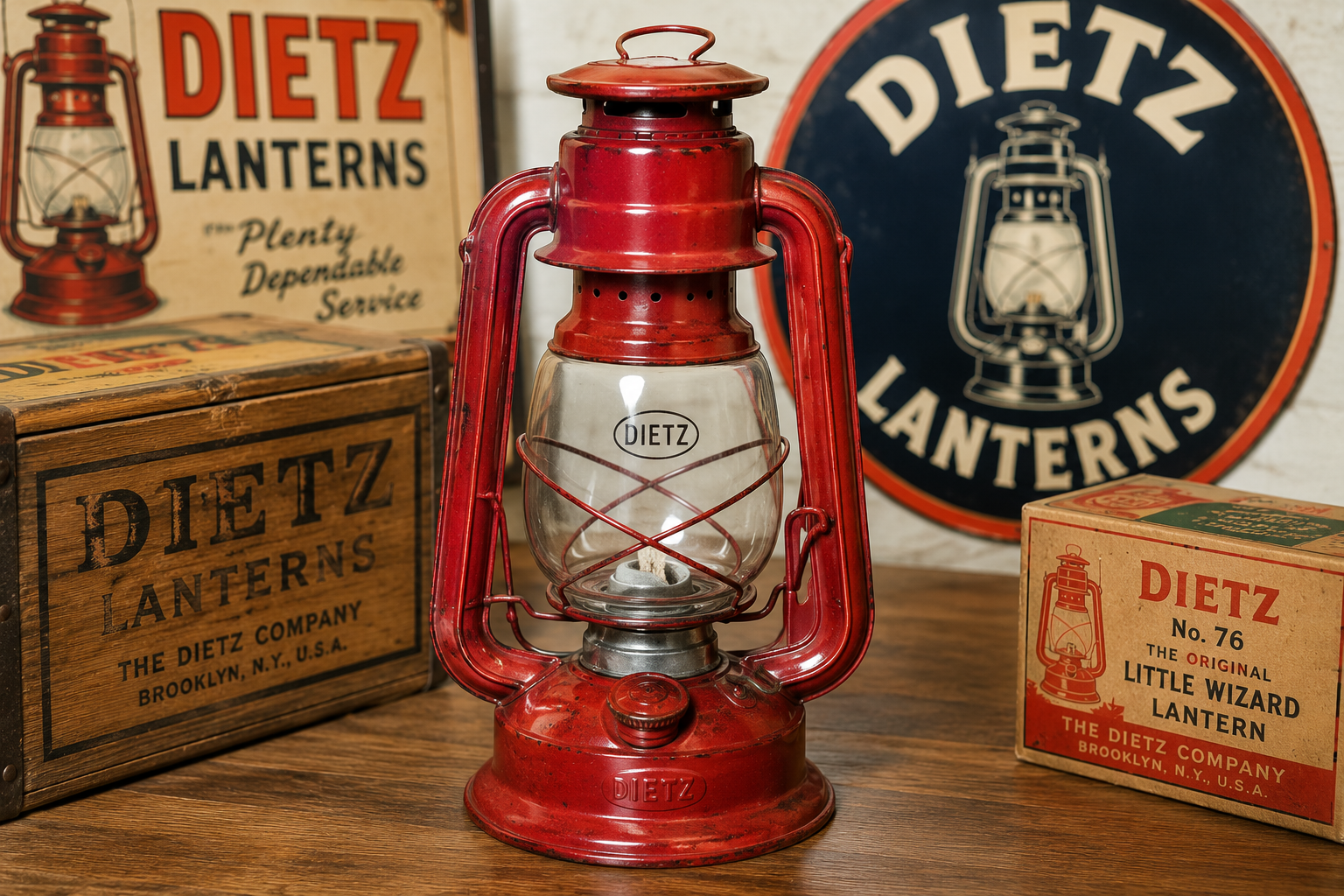
Few pieces of antique lighting have earned a reputation for reliability quite like the Dietz Hurricane Lantern. Introduced during the second half of the nineteenth century by the R. E. Dietz Company of New York, these kerosene lanterns were designed to withstand harsh weather while providing dependable illumination. Their innovative "cold blast" airflow system improved combustion and protected the flame from strong winds, making them indispensable on farms, railroads, construction sites, ships, and homesteads throughout North America and beyond.
As the Industrial Revolution transformed transportation and agriculture, portable lighting became essential. Dietz answered that need by producing lanterns that were durable, easy to maintain, and affordable. Models such as the  No. 2 Blizzard, No. 76 Original, and Little Wizard became household names, each serving different purposes depending on the user's needs. Over decades of production, millions were manufactured, yet surviving examples continue to attract collectors because of their historical significance, engineering, and wide variety of model variations.
Beyond their practical use, Dietz lanterns represent an era when craftsmanship and function worked hand in hand. They illuminated railroad tracks, barns, fishing boats, mines, and family homes long before electric lights became commonplace. Today, they remain enduring symbols of nineteenth- and twentieth-century industry, rural life, and American manufacturing.
Newly Listed on eBay
Collectors quickly discover that no two Dietz lanterns are exactly alike. Over more than a century of production, numerous model names, globe styles, colors, handles, burners, and embossed markings were introduced. Some lanterns were built specifically for railroad companies or export markets, while others were marketed for everyday household use. This variety makes identification both rewarding and challenging, encouraging enthusiasts to study catalogs, patent dates, and factory markings.
When evaluating a lantern, originality is often more important than appearance. An honest lantern with worn factory paint, light surface oxidation, and its original globe is frequently preferred over one that has been heavily restored. Replacement globes are common because glass was the component most likely to break during years of service. Learning to recognize authentic Dietz embossing, correct burner assemblies, and period hardware can help collectors distinguish original examples from later restorations or assembled pieces.
Although electric lighting eventually replaced kerosene lanterns in everyday life, Dietz lanterns continue to be appreciated for both their historical importance and decorative appeal. They remain popular display pieces in homes, cabins, museums, and transportation collections, serving as lasting reminders of a time when dependable portable light was an essential tool rather than a convenience.