
Sealed NES Games: What Collectors Inspect Before Paying Serious Money
- Jul 2026
- The Hot Collector
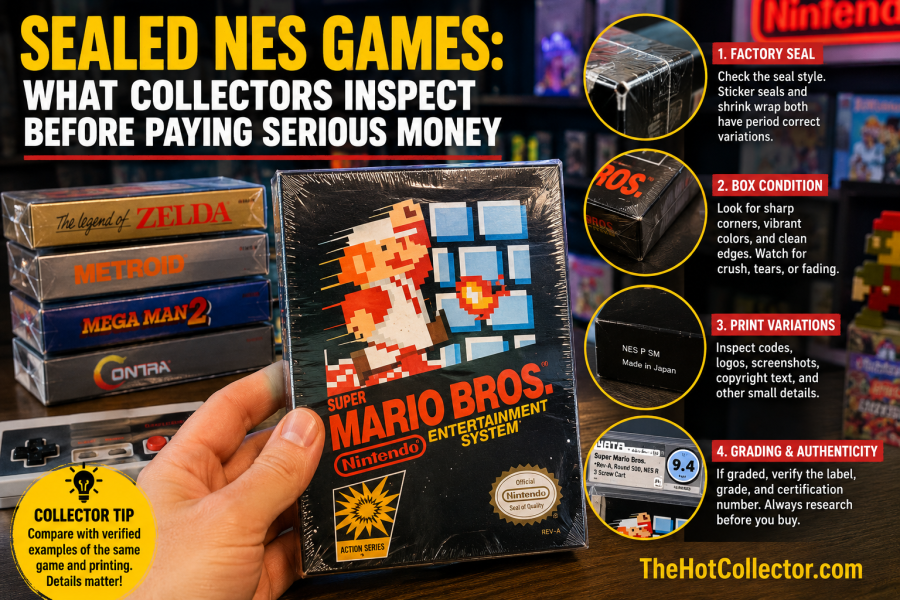
A sealed Nintendo Entertainment System game can look almost comically simple: one small cardboard box wrapped in plastic, sitting untouched for decades. Yet that fragile package may attract far more attention than the cartridge inside. To collectors, the box is not merely packaging. It is evidence of how the game first appeared on a store shelf.
That distinction matters because millions of NES games were opened, played, loaned to friends, written on, traded, and eventually separated from their manuals and boxes. Complete examples survived in smaller numbers, while genuinely unopened copies became harder to find. Growing international interest in vintage gaming has also turned old cartridges, consoles, promotional pieces, and original packaging into a much broader collectibles field. eBay has highlighted the global reach of major retro-game sellers, while current collector interest continues to center on recognizable Nintendo franchises and early physical releases.
The first mistake a new buyer can make is assuming every layer of plastic is an original factory seal.
Some NES releases were sealed with shrink wrap, while certain early examples used sticker seals or other packaging methods. The correct style depends on the title, production period, and distribution history. A neat-looking wrap may have been added years later by a store, previous owner, or dishonest seller. Heat seams that appear too thick, irregular corners, loose plastic, or suspicious openings around the flaps deserve close attention.
Collector’s Tip: compare the seal with verified examples of the same game and printing. Looking at another NES title from the same year is not always enough. Packaging could vary by publisher, region, production run, and reissue.
The box itself can reveal just as much as the plastic. Inspect the artwork, product codes, screenshots, copyright wording, hang tabs, promotional bursts, and tiny printing details. Collectors often describe early Nintendo releases as black box games because of their recognizable packaging style. Within that group, small design and printing differences can influence demand.
One game may exist in several releases that appear nearly identical from across the room. Up close, however, a changed code, revised screenshot, altered seal, or different warranty statement may identify an earlier or later printing. Those variations are exactly why careful research matters before paying a premium.
Right now on eBay
Condition creates another layer of difficulty. A sealed game can still have crushed corners, faded artwork, punctures, tears, price stickers, stains, or plastic that has begun to split. Because the package cannot be opened and flattened, box damage may be impossible to correct without destroying the very feature that makes the game collectible.
Look Closely: strong color is especially important. Sunlight can fade the spine or front panel while leaving the rest of the box bright. A seller may photograph the best side and avoid showing the faded edge, so clear images of every panel are essential.
Original store stickers are a matter of personal taste. Some collectors dislike them because they cover artwork. Others enjoy them as evidence of where the game was sold. A period Toys “R” Us, Sears, Kay-Bee, or local game-store label can give a sealed game personality, even if it does not automatically increase its value.
Grading has become a major part of high-end video game collecting. A professional holder can document condition and provide a grade, but collectors should still understand what the label says. The company, numerical grade, seal rating, listed variation, and certification number all deserve attention. A plastic case should support your research, not replace it.
Watch Out For: tampered holders, copied labels, undisclosed rewrapping, and vague descriptions such as “looks factory sealed.” Serious sellers should be willing to provide close photographs of seams, corners, hang tabs, codes, and any damage.
Provenance becomes especially important when the price climbs. An old purchase receipt, distributor carton, store inventory history, auction record, or earlier photograph can help support the story of an unopened game. Provenance does not make a common title rare, but it can make an exceptional copy easier to trust.
The most desirable sealed NES games often combine several qualities: an important title, an early or scarce production variation, original packaging, vivid color, sharp corners, and a believable history. Super Mario Bros., The Legend of Zelda, Metroid, Mega Man, Castlevania, and other famous franchises attract broad interest because collectors remember playing them and recognize their importance within gaming history.
That nostalgia is powerful, but it can also cause buyers to rush. The game that defined someone’s childhood may still be common in a particular version. Emotional attachment should begin the search—not end the inspection.
Why Collectors Care: a sealed game preserves more than software. It captures the artwork, advertising language, retail presentation, and anticipation surrounding a new release. Nintendo’s own history places Super Mario Bros. at the beginning of a franchise timeline that now stretches across decades of sequels and platforms.
A loose cartridge lets you revisit the game. A complete boxed copy recreates the ownership experience. A true factory-sealed copy preserves the moment before anyone ever pressed Start.