
Stein Collectibles
Collector Quick Guide
What collectors look for
Original condition, age, maker marks, materials, completeness, unusual variants, and documented history usually matter most.
How to identify originals
Compare markings, construction details, finish, size, period-correct materials, and known design features before assuming authenticity.
Red flags / reproductions
Watch for reproductions, heavy restoration, replaced parts, fantasy pieces, unclear photos, and listings with vague descriptions.
Related collectibles
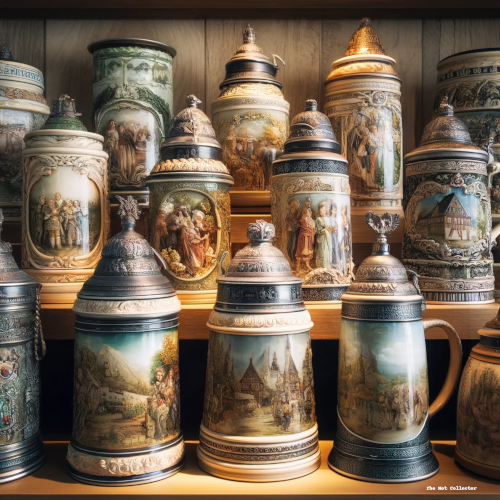
Steins, often synonymous with beer mugs, are traditional German drinking vessels known for their ornate designs and historical significance. Originating from the German word "Steingut," meaning stoneware, steins have evolved into cherished collectibles, embodying centuries of cultural heritage and craftsmanship. These iconic vessels trace their roots back to the 14th century when the Black Plague necessitated the development of covered drinking containers to prevent contamination. Over time, steins have transformed from practical objects into highly decorative art pieces, reflecting various artistic movements and historical periods.
The earliest steins were made from stoneware, a durable material that kept beverages cool. These stoneware steins featured simple designs and were often adorned with a pewter lid. The lids, hinged with a thumb lift, were a response to hygiene concerns of the era, preventing insects and debris from falling into the drink. As stein production advanced, artisans began experimenting with different materials, including porcelain, glass, and pewter. Each material brought its unique charm and added to the diversity of stein collectibles.
By the 16th century, the decoration of steins became more elaborate. Intricate carvings, hand-painted scenes, and relief work turned these drinking vessels into works of art. Themes ranged from historical events and folklore to everyday life and landscapes. The Renaissance period saw the incorporation of human figures and mythological creatures, while the Baroque era introduced even more elaborate and detailed designs. Collectors today value steins not only for their aesthetic appeal but also for their historical narratives and the stories they tell about the past.
One of the most notable features of collectible steins is the variety of lid designs. Pewter lids remained popular due to their malleability and ease of decoration. Some lids were topped with figures or scenes that complemented the body of the stein, adding an extra layer of visual interest. The craftsmanship of these lids often mirrored the artistic trends of their time, making them a focal point for collectors. Additionally, the lids helped preserve the carbonation and temperature of the beer, enhancing the drinking experience.
Right now on eBay
In the 19th century, the rise of German nationalism influenced stein designs. Patriotic motifs, such as the German eagle and military scenes, became prevalent. Steins from this period often commemorated significant events and anniversaries, making them valuable historical artifacts. The tradition of presenting steins as gifts during special occasions, such as weddings and retirements, also added to their sentimental value.
Modern stein collecting has grown into a dedicated hobby, with enthusiasts seeking out rare and unique pieces. Collectors often focus on specific themes, materials, or time periods, leading to a diverse range of collections. Authenticity and condition play crucial roles in determining a stein's value. Original lids, intact decorations, and minimal damage significantly increase a stein's worth. Provenance, or the history of ownership, can also add to a stein's desirability, especially if it was part of a notable collection or owned by a famous individual.
Today, steins are celebrated not only for their historical significance but also for their artistic beauty. Museums and private collections around the world showcase these fascinating objects, highlighting the evolution of craftsmanship and design over the centuries. Whether displayed as decorative pieces or used for their original purpose, steins continue to captivate collectors and beer enthusiasts alike. The allure of stein collecting lies in the blend of history, artistry, and tradition, making each piece a unique testament to the cultural heritage of beer drinking.