
Platinum
Collector Quick Guide
What collectors look for
Collectors look for genuine platinum pieces with clear hallmarks, quality workmanship, original settings, attractive design, and minimal alteration. Antique and Art Deco platinum jewelry can be especially desirable because the metal allowed jewelers to create intricate, delicate-looking settings while remaining exceptionally strong. Maker attribution, provenance, gemstones, condition, and period-correct construction can all increase collector interest.
How to identify originals
Look for platinum fineness marks such as PLAT, PT, 950, 900, 950 PLAT or other recognized marks appropriate to the country and period. Platinum feels unusually dense for its size and normally retains a naturally white-gray appearance rather than requiring plating to look white. Hallmarks, construction methods, maker marks, and professional testing should all be considered together when authenticating an older piece.
Red flags / reproductions
Be cautious of pieces advertised as platinum solely because they appear silver-white. White gold, silver, palladium, and plated metals can sometimes resemble platinum. Watch for altered hallmarks, replacement components, repaired settings, modern reproductions represented as antique, and descriptions such as “platinum finish” or “platinum plated,” which do not mean the object is solid platinum.
Related collectibles
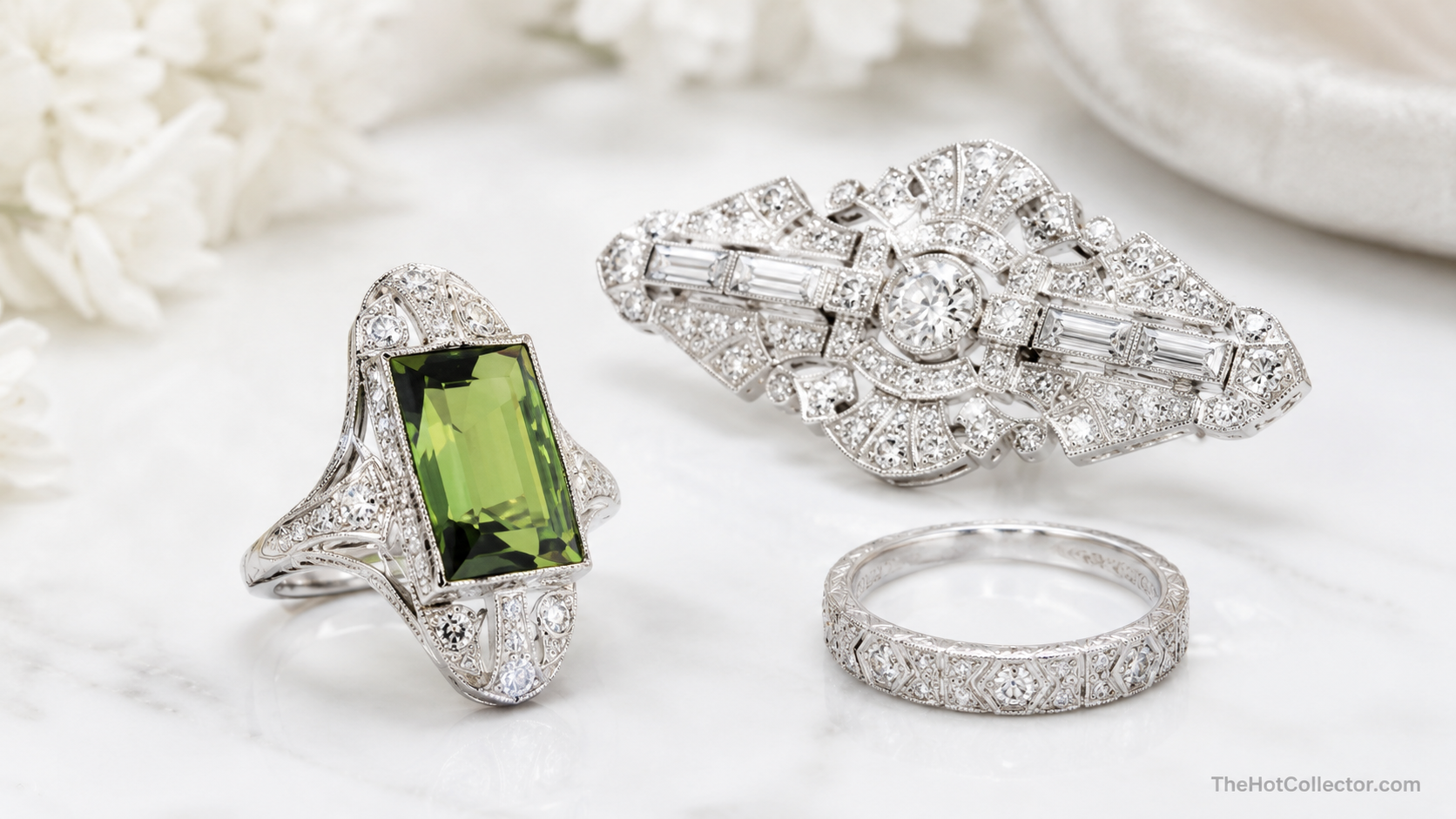
Platinum occupies a special place in the world of antique and vintage collecting. Rare, dense, naturally white, and highly resistant to corrosion, it became one of the most prestigious materials used in fine jewelry and decorative objects. Unlike white gold, which is an alloy created to achieve a pale appearance, platinum is naturally white-gray and develops its own subtle surface character with age. For collectors, that combination of rarity, durability, and craftsmanship makes historic platinum pieces particularly fascinating.
The metal became especially important to jewelers during the late 19th and early 20th centuries. Its exceptional strength allowed craftsmen to create thin yet secure settings that could hold diamonds and gemstones while using less visible metal. This helped produce the delicate, lace-like jewelry of the Edwardian period and later the bold geometric designs associated with Art Deco. Platinum rings, brooches, bracelets, necklaces, watches, and gemstone settings from these periods remain highly sought after.
Collectors evaluating platinum pieces usually look beyond the metal alone. Age, maker, design, gemstone quality, originality, condition, and provenance can dramatically affect desirability. A beautifully preserved period piece with its original stones and recognizable maker's mark may have far greater collector appeal than the value of its platinum content alone. Likewise, jewelry produced by an important designer or luxury house can command substantial premiums because collectors are buying craftsmanship and history as much as precious metal.
Identifying platinum requires some care. Older pieces may carry marks such as PLAT, PLATINUM, PT, 900, or 950, although marking systems vary by country and period. Platinum is noticeably dense and generally heavier than a similarly sized piece made from gold or silver. Because valuable antique jewelry is sometimes repaired, resized, or assembled from different components, experienced collectors examine the entire piece rather than relying on a single hallmark.
Right now on eBay
Condition and originality play major roles in collectible platinum. Fine jewelry may survive for generations because platinum is extremely durable, but that does not mean every old piece remains untouched. Rings may have been resized, gemstone settings rebuilt, stones replaced, clasps changed, or damaged sections repaired. These alterations do not necessarily make an item undesirable, but collectors generally want them disclosed so they can properly assess originality and value.
Platinum also develops a distinctive surface patina through normal wear. Fine scratches can create a soft satin-like appearance rather than removing significant amounts of metal. Some collectors appreciate this natural aging because it reflects the history of the piece, while others prefer professionally polished examples. Aggressive polishing can soften engraving, hallmarks, decorative details, and crisp edges, so unnecessary restoration may actually reduce the historical character collectors value.
Authentication becomes particularly important with expensive pieces. White gold, palladium, silver, and other pale metals can resemble platinum at a glance, while misleading listings may use phrases such as “platinum tone” or “platinum finish.” Hallmarks are helpful but should never be the only evidence considered. Professional metal testing, examination of construction techniques, maker research, and comparison with documented examples can provide much stronger confirmation.
For collectors, platinum represents much more than a precious metal. The finest pieces capture changing fashions, advances in jewelry making, exceptional craftsmanship, and the tastes of earlier generations. From intricate Edwardian diamond settings to dramatic Art Deco rings and elegant mid-century estate jewelry, vintage platinum objects continue to attract collectors who appreciate the intersection of material rarity, design, history, and craftsmanship.