
Civil War Tokens
Collector Quick Guide
What collectors look for
Original condition, age, maker marks, materials, completeness, unusual variants, and documented history usually matter most.
How to identify originals
Compare markings, construction details, finish, size, period-correct materials, and known design features before assuming authenticity.
Red flags / reproductions
Watch for reproductions, heavy restoration, replaced parts, fantasy pieces, unclear photos, and listings with vague descriptions.
Related collectibles
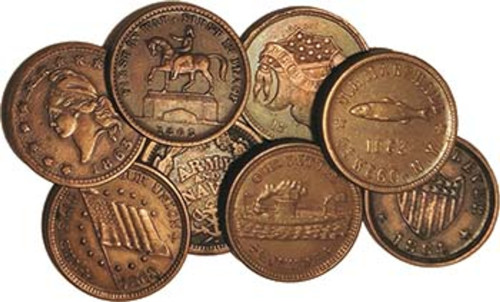
Civil War tokens are a fascinating collectible that emerged during a time of great strife and economic hardship in American history. These small, privately minted tokens were used as a substitute for official coinage during the American Civil War (1861-1865), when there was a severe shortage of government-issued money. Collectors treasure these tokens for their historical significance, artistic designs, and the stories they tell about a turbulent period in the United States.
The scarcity of small change began early in the Civil War, as people hoarded coins made of precious metals like gold, silver, and copper. This led to a significant disruption in everyday transactions, especially in the northern states where the economy remained relatively stable. In response to this shortage, enterprising individuals and businesses began producing their own tokens to facilitate trade. These tokens typically came in denominations of one cent and were made from copper, bronze, or brass.
There are two main types of Civil War tokens: patriotic tokens and store cards. Patriotic tokens feature designs that reflect the sentiments and symbols of the time. Common motifs include the American flag, the Liberty head, eagles, and various patriotic slogans such as "The Union Must and Shall Be Preserved" and "Army and Navy." These tokens served not only as a medium of exchange but also as a means of expressing support for the Union cause.
Store cards, on the other hand, were issued by individual merchants and businesses. These tokens often included the name, address, and type of business, effectively serving as an early form of advertising. Store cards provided merchants with a way to keep their business transactions flowing despite the coin shortage. The designs on store cards varied widely, with some featuring intricate and artistic engravings that make them highly sought after by collectors today.
Right now on eBay
One of the most appealing aspects of Civil War tokens is their variety. It is estimated that over 10,000 different designs were produced during the Civil War, offering collectors a rich and diverse field to explore. The tokens were often struck using simple hand-operated presses, which resulted in unique variations and errors that add to their collectible appeal. Some tokens were struck off-center, double-struck, or show other minting anomalies, making them particularly interesting to exonumia enthusiasts. The rarity and condition of Civil War tokens greatly influence their value. Tokens that are well-preserved with sharp details and minimal wear are highly prized. Additionally, certain designs are much rarer than others, often due to the limited number of tokens produced by smaller businesses or the use of more elaborate and expensive dies. Tokens that can be traced back to specific historical events or notable individuals also carry a premium.
Collecting Civil War tokens offers a unique window into the past. Each token represents a piece of the social, economic, and political fabric of Civil War-era America. The tokens provide insights into the daily lives of people who lived through the conflict, their businesses, and their patriotic fervor. Many collectors are drawn to the historical narratives encapsulated in these small pieces of metal, finding joy in uncovering the stories behind each token.
Today, Civil War tokens are highly valued by numismatists and history enthusiasts alike. They can be found in specialized auctions, coin shows, and through dealers who specialize in exonumia. As with any collectible, provenance and authenticity are crucial, so collectors are advised to purchase tokens from reputable sources.
Civil War tokens are more than just monetary substitutes; they are historical artifacts that capture the spirit and struggles of a nation at war. Their rich variety, historical context, and artistic designs make them a compelling area of study and collection for anyone interested in American history and numismatics.