
Spanish Doubloon
Collector Quick Guide
What collectors look for
Original condition, age, maker marks, materials, completeness, unusual variants, and documented history usually matter most.
How to identify originals
Compare markings, construction details, finish, size, period-correct materials, and known design features before assuming authenticity.
Red flags / reproductions
Watch for reproductions, heavy restoration, replaced parts, fantasy pieces, unclear photos, and listings with vague descriptions.
Related collectibles
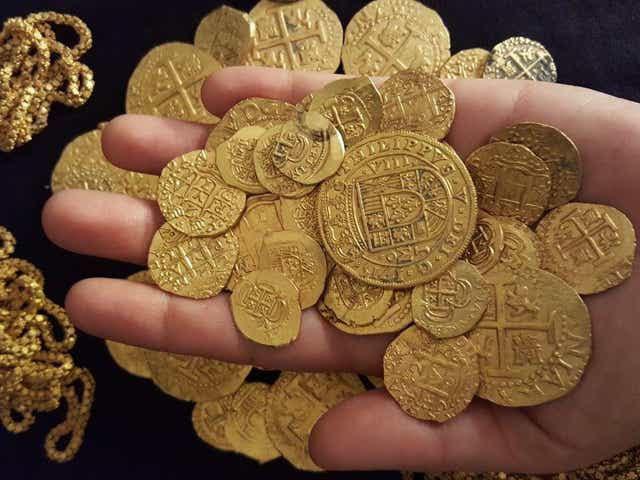
The Spanish doubloon, a legendary gold coin, is one of the most famous and coveted coins in the world. Minted primarily in Spain and its colonies during the 16th to 19th centuries, the doubloon played a key role in global trade and the expansion of the Spanish Empire. The coin's high gold content and historical significance make it a prized collectible for numismatists and treasure hunters alike. Its association with pirate lore, shipwrecks, and hidden treasure only adds to its mystique.
The doubloon takes its name from the Spanish word "doblón," meaning "double," as it was originally valued at two escudos. The coin was typically made of 22-carat gold, with each doubloon weighing approximately 6.77 grams. The standard value of the doubloon was often around 16 Spanish reales, though its worth could vary depending on the time period and region. Doubloons were minted in several denominations, including the two-escudo coin (a "double doubloon"), the four-escudo, and the eight-escudo, which became the most recognized version.
The design of the Spanish doubloon is notable for its simplicity and regal symbolism. The obverse side typically featured the reigning monarch's portrait or coat of arms, while the reverse displayed the Pillars of Hercules, a symbol of Spain's imperial power. Above the pillars was the Latin motto "PLUS ULTRA," meaning "more beyond," reflecting Spain's exploration and colonization of the New World. These designs evolved over time, but they always emphasized the wealth and influence of the Spanish crown.
Spanish doubloons were minted not only in Spain but also in several Spanish colonies in the Americas, including Mexico, Peru, and Colombia. The mints in these colonies produced vast quantities of gold and silver coins, much of which was shipped back to Spain to finance its wars, exploration, and lavish court. However, the transportation of these coins across the Atlantic made them prime targets for pirates and privateers. The image of pirates seeking doubloons and other treasure aboard Spanish galleons has become an enduring part of popular culture, immortalized in books, films, and legends.
Right now on eBay
The historical significance of the Spanish doubloon cannot be overstated. During the Age of Exploration, Spain's wealth from its New World colonies, particularly in gold and silver, transformed the country into one of the most powerful empires in the world. Doubloons were circulated widely across Europe, the Americas, and beyond, serving as a global currency in trade. Their influence can still be seen in various world currencies today, including the United States dollar, which was partly based on the Spanish real.
In the world of coin collecting, Spanish doubloons are among the most prized and valuable coins. Coins that were recovered from shipwrecks, such as those of the famed Spanish treasure fleets, are especially sought after. These shipwreck doubloons often come with provenance, linking them to specific historical events and adding to their allure. The value of a Spanish doubloon depends on several factors, including its condition, rarity, and historical significance. Coins that remain in good condition, with clear markings and minimal wear, command the highest prices.
For collectors, owning a Spanish doubloon is akin to holding a piece of history in their hands. Whether acquired through auctions, treasure finds, or numismatic dealers, these coins evoke the grandeur of the Spanish Empire and the golden age of exploration. They are symbols of adventure, wealth, and the enduring human fascination with gold.
The Spanish doubloon continues to capture the imagination of collectors, historians, and adventurers. Its blend of rich history, cultural significance, and inherent value make it a timeless collectible in the world of numismatics.