
Classic Head Half Cent 1809 - 1836
Collector Quick Guide
What collectors look for
Original condition, age, maker marks, materials, completeness, unusual variants, and documented history usually matter most.
How to identify originals
Compare markings, construction details, finish, size, period-correct materials, and known design features before assuming authenticity.
Red flags / reproductions
Watch for reproductions, heavy restoration, replaced parts, fantasy pieces, unclear photos, and listings with vague descriptions.
Related collectibles
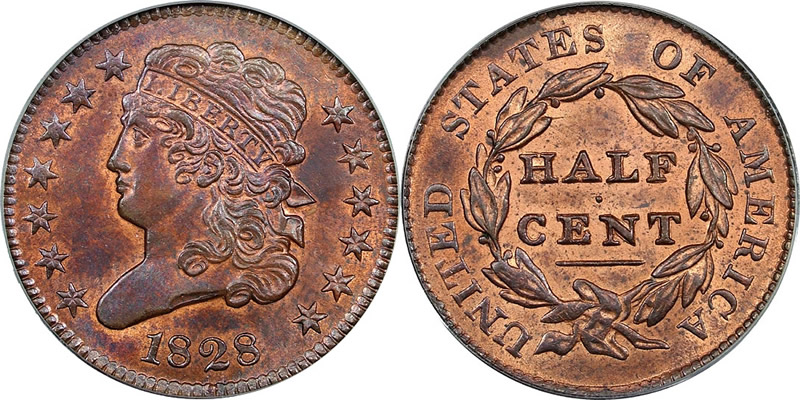
The Classic Head Half Cent, minted from 1809 to 1836, holds a significant place in American numismatic history. These small copper coins, measuring 23.5 mm in diameter, were among the earliest coinage issued by the United States Mint and bear a classic design that reflects the nation's formative years. Let's delve into the history, design, and varieties of this intriguing coin.
History: The Birth of the Classic Head Half Cent and the United States Mint
The birth of the Classic Head Half Cent in 1809 was closely tied to the establishment and early years of the United States Mint. Following the nation's independence in 1776, there was a pressing need for a reliable and standardized system of coinage to facilitate commerce and trade. In response to this need, the Coinage Act of 1792 was passed, which authorized the creation of the United States Mint in Philadelphia, then the nation's capital.
The Mint's first official facility, the Philadelphia Mint, began its operations in 1793, and its initial coinage efforts focused on producing copper coins, as silver and gold coins required more extensive resources and machinery. Among the coins introduced were the Large Cent and the Half Cent. The latter, equivalent to half of a cent, was essential for smaller transactions and was originally struck in 1793, featuring a Liberty Cap design.
The Need for a New Design:
As the 18th century gave way to the 19th century, the need for a new design for the Half Cent arose. The existing Liberty Cap design, though significant historically, was showing signs of wear and had limited aesthetic appeal. In 1808, the Mint Director, Robert Patterson, decided it was time for a change and set the wheels in motion for a fresh look.
The Talented Engraver - John Reich:
To realize this vision, Robert Patterson turned to a talented German-born engraver named John Reich. Born in 1768 in Bavaria, Reich had immigrated to the United States in 1800. He joined the Mint as an Assistant Engraver, and in 1807, he was tasked with improving the design of the nation's silver coinage.
Reich's exceptional skills caught the attention of Mint officials, and he was soon selected to create the new design for the Half Cent. Reich embraced the neoclassical style that was popular at the time and sought to imbue Lady Liberty with a more refined and elegant appearance.
The Classic Head Design:
In 1809, the Classic Head Half Cent was officially introduced to the public. The coin featured a left-facing portrait of Lady Liberty, an icon commonly associated with the ideals of freedom and liberty, which were central to the nation's identity. The design portrayed Lady Liberty with her hair neatly tied in a ribbon, wearing a beaded crown inscribed with the word "Liberty."
The obverse (front) of the coin also displayed the inscription "Half Cent" and the date of minting. On the reverse (back), a wreath encircled the denomination "1/200," indicating its value in relation to one dollar. The wreath was tied with a bow at the bottom, and the words "United States of America" adorned the periphery of the design.
Right now on eBay
Varieties: Throughout its 27-year run, the Classic Head Half Cent saw several noteworthy varieties, which have become highly sought after by numismatic enthusiasts:
-
1809 - The Cohen-1 Variety: This inaugural year features John Reich's original design, with the fraction "1/200" positioned closely together in the wreath. Later in 1809, another variety emerged with the fraction spaced farther apart within the wreath, known as the Cohen-2 Variety.
-
1831 - The Reduced Diameter Variety: In an attempt to save on production costs, the diameter of the coin was reduced from 23.5 mm to 23 mm starting in 1831. This change makes the 1831-1836 half cents a distinct sub-type among Classic Head Half Cents.
-
1836 - The Last Year of Issue: The final year of the Classic Head Half Cent series, 1836, is also notable for the introduction of a head of a sturdier appearance. This change was attributed to the use of modified dies or the work of Chief Engraver William Kneass. As a result, some collectors refer to this as the "Original Head" and the earlier design as the "Modified Head."
The Legacy of the Classic Head Half Cent:
The Classic Head Half Cent's introduction marked a pivotal moment in American numismatic history. The coin's classic design and its departure from the earlier Liberty Cap motif reflected the nation's growing identity and aspirations. As the young United States continued to evolve, so did its coinage, and the Classic Head Half Cent served as a testament to the nation's progress.
The coins were extensively used in daily transactions, and their small size and low value meant they circulated widely among various economic strata. However, with time, inflation eroded their practicality, and the demand for the denomination decreased.