
Standing Liberty Quarter 1916 - 1930
Collector Quick Guide
What collectors look for
Original condition, age, maker marks, materials, completeness, unusual variants, and documented history usually matter most.
How to identify originals
Compare markings, construction details, finish, size, period-correct materials, and known design features before assuming authenticity.
Red flags / reproductions
Watch for reproductions, heavy restoration, replaced parts, fantasy pieces, unclear photos, and listings with vague descriptions.
Related collectibles
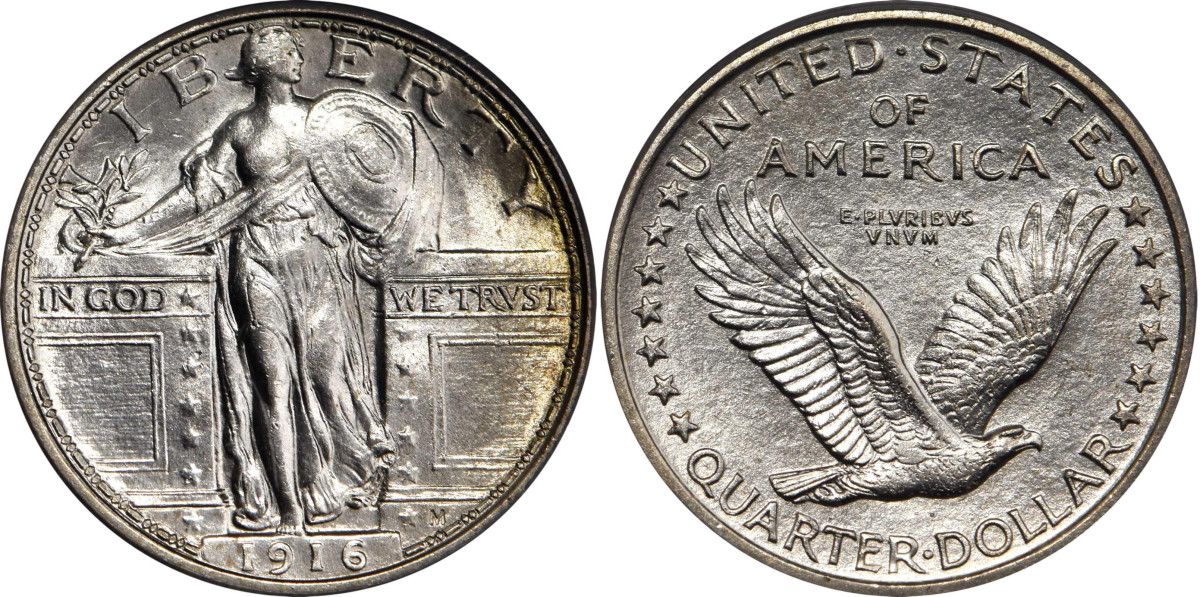
In the midst of World War I in 1916, a new era in American coinage was born with the introduction of the Standing Liberty quarter. Designed to symbolize the nation's preparedness for both peace and war, this iconic coin featured a striking portrayal of Liberty, an olive branch of peace in one hand and a protective shield in the other. Sculptor Hermon Atkins MacNeil's design showcased a blend of classical Greek aesthetics and American symbolism, influenced by his mentor Augustus Saint-Gaudens.
The  Standing Liberty quarter series commenced in 1916 and continued through 1930, produced at three different mints: Philadelphia (no mintmark), San Francisco (S), and Denver (D). Notably, Type 1 coins from 1916-1917 caused controversy due to Liberty's "bare breast," resulting in a modified Type 2 design with chain mail covering her chest from 1917 onwards. A minor design change in 1925 recessed the date area to improve durability.
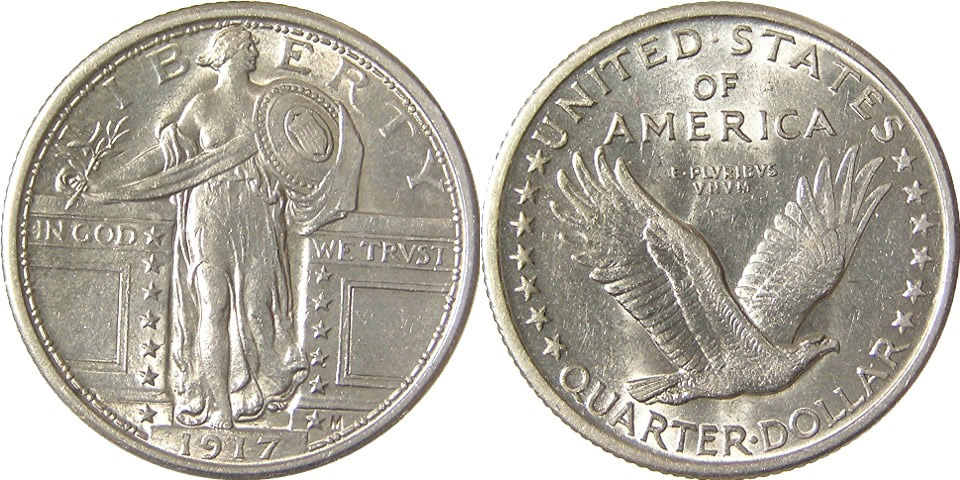
No Stars Below Eagle (1916-1917)
Today, collectors highly value the Standing Liberty quarter for its exquisite design. It is commonly collected by date, mint, or as part of various sets. Completing a full set in uncirculated condition is a rewarding endeavor, providing a profound experience in the world of numismatics.
Right now on eBay
Among the key dates in this series, the 1916 Type 1 issue stands out, with a low mintage of 52,000. While considered rare, it can still be found in larger numbers than one might expect, as collectors initially saved these new and distinctive coins upon release.
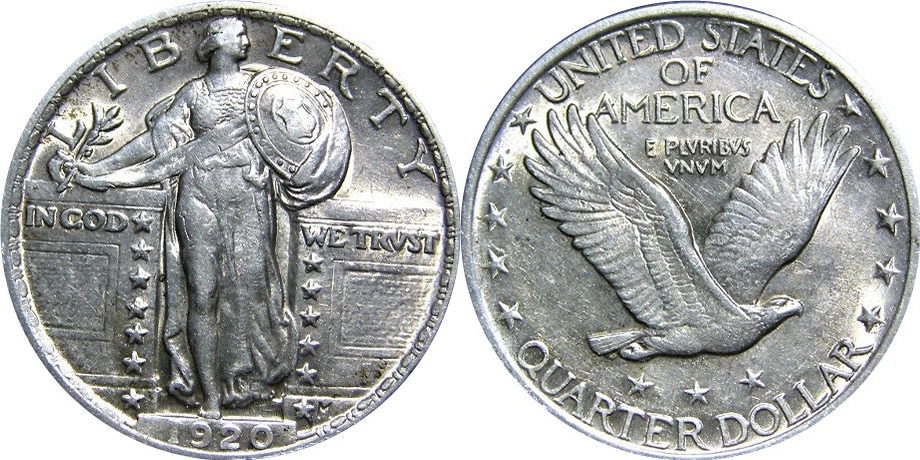
Stars Below Eagle (1917-1930)
However, the crown jewel of the Standing Liberty quarter series is the 1918/7-S overdate, a Type 2 variety. This exceptional rarity resulted from improperly prepared dies and wasn't discovered by collectors until years later. With an unknown mintage, this coin is incredibly scarce in all grades, particularly with a full head in mint state. The 1918/7-S overdate is one of the most coveted collector coins of the 20th century, often the missing piece in otherwise complete sets, making it a true numismatic treasure.