
Braided Hair Half Cent 1840 - 1857
Collector Quick Guide
What collectors look for
Original condition, age, maker marks, materials, completeness, unusual variants, and documented history usually matter most.
How to identify originals
Compare markings, construction details, finish, size, period-correct materials, and known design features before assuming authenticity.
Red flags / reproductions
Watch for reproductions, heavy restoration, replaced parts, fantasy pieces, unclear photos, and listings with vague descriptions.
Related collectibles
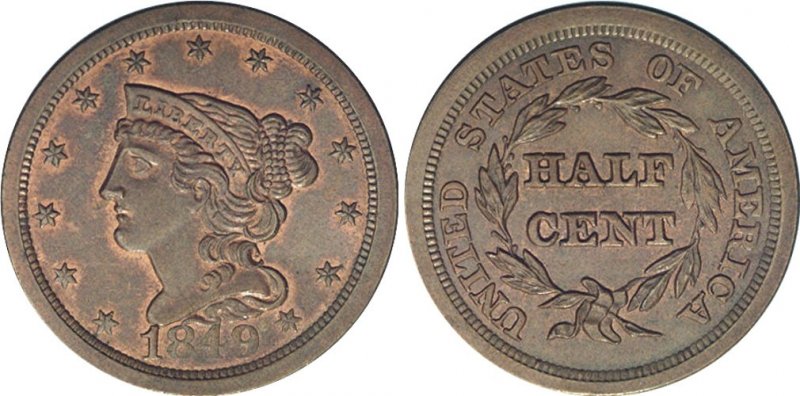
The Braided Hair Half Cent, minted from 1840 to 1857, stands as a fascinating piece of American numismatic history. This small copper coin, adorned with a braided hair motif on the obverse, carries with it a wealth of historical significance. In this article, we will explore the designer, delve into its captivating history, and shed light on notable varieties that have captivated collectors for generations.
Designer: Christian Gobrecht, the talented Chief Engraver of the United States Mint, is credited with designing the Braided Hair Half Cent. Gobrecht's artistic prowess is evident in the intricately braided hair depicted on Lady Liberty's head, adorning the coin's obverse. Gobrecht's attention to detail and artistic finesse brought a unique charm to the Braided Hair Half Cent.
History:
The Braided Hair Half Cent was introduced in 1840 as a successor to the Classic Head Half Cent. Its production occurred during a period of significant social and economic transformation in the United States. The nation was expanding westward, and the Industrial Revolution was gaining momentum.
The Braided Hair Half Cent represented a transition in American coinage. Prior to its introduction, the Classic Head design, with its coronet and matronly appearance, had been used since 1809. The transition to the Braided Hair design was a response to the desire for a more modern and stylistically refined coinage.
These copper half cents were minted at the Philadelphia Mint, the only active mint in the United States during that period. The years between 1840 and 1857 witnessed varying mintages, with some years seeing higher production due to increased demand for small denomination coins.
The Braided Hair Half Cent was minted in response to a growing need for smaller denominations in everyday commerce. As the country expanded and trade flourished, there was a demand for coins of lower value. The half cent filled this role, providing a convenient means of exchange for small purchases and transactions.
However, the widespread use of the half cent diminished over time, leading to its eventual discontinuation. The rising costs of producing these copper coins, coupled with public sentiment against fractional currency, contributed to its demise. By the late 1850s, the half cent was no longer seen as essential for daily transactions, and its production ceased in 1857.
Right now on eBay
Varieties: Collectors of the Braided Hair Half Cent are drawn to the coin's intriguing varieties, which add depth to their collections. Notable varieties include the 1840 No Drapery, 1848, and 1852. The 1840 No Drapery variety lacks the customary drapery beneath Lady Liberty's elbow, making it a sought-after piece among collectors. This variety was a result of an early die state before the drapery was added.
The 1848 variety is known for having small and large berries on the reverse wreath. This discrepancy in the size of the berries adds an element of uniqueness and intrigue to the coin. Additionally, the 1852 variety features a prominent double-punched date, which is considered a minting error and further enhances its desirability among collectors.
Collectibility and Value: The Braided Hair Half Cent holds significant collectible value among numismatists and coin enthusiasts. The rarity, condition, and demand for specific varieties influence the coin's worth. Well-preserved examples with crisp details command higher prices, while rare varieties, such as the aforementioned 1840 No Drapery, are particularly coveted.
As with any collectible, the value of the Braided Hair Half Cent can fluctuate over time based on market demand and availability. The coin's historical significance, combined with its artistic appeal and rarity, contribute to its enduring allure among collectors and investors.
Conclusion: The Braided Hair Half Cent, designed by Christian Gobrecht, offers a captivating glimpse into a transformative period in American history. As an artifact of the nation's expansion and the Industrial Revolution, this small copper coin embodies the spirit of the times. With its delicate braided hair motif and unique varieties, the Braided Hair Half Cent continues to inspire awe and fascination among collectors, ensuring its enduring place in the realm of numismatics.