
Two Cents (1864-1873)
Collector Quick Guide
What collectors look for
Original condition, age, maker marks, materials, completeness, unusual variants, and documented history usually matter most.
How to identify originals
Compare markings, construction details, finish, size, period-correct materials, and known design features before assuming authenticity.
Red flags / reproductions
Watch for reproductions, heavy restoration, replaced parts, fantasy pieces, unclear photos, and listings with vague descriptions.
Related collectibles
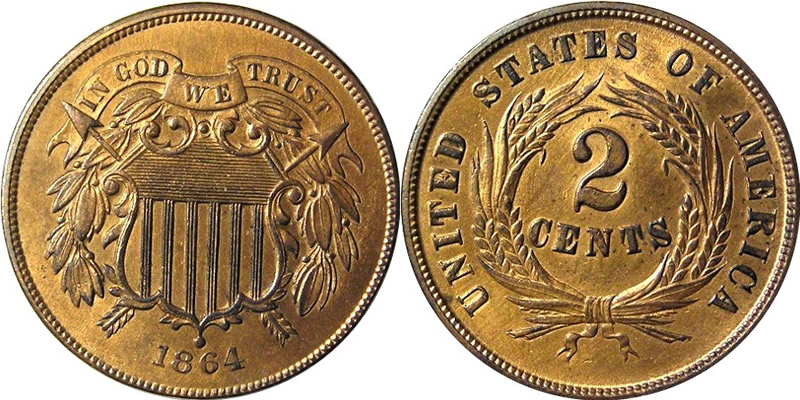
The Two Cents coin, minted from 1864 to 1873, holds a unique place in American numismatic history as one of the shortest-lived denominations. It was introduced during the Civil War as a response to the severe shortage of small denomination coins in circulation. Due to hoarding and the high value of silver and gold coins, there was a need for coins of smaller value. The Two Cents coin, along with the introduction of the copper-nickel alloy, was the solution.
The Two Cents coin was designed by James Barton Longacre, who was also responsible for designing the famous Indian Head Cent and the Indian Princess Gold Dollar. Longacre's design for the Two Cents coin was distinctive and innovative for its time. The obverse features a shield with the denomination "2 CENTS" inscribed within it. Above the shield, the words "IN GOD WE TRUST" are prominently displayed, making this coin one of the first to feature this national motto.
-
Obverse Design: The obverse of the Two Cents coin showcases a large, ornate shield with the denomination "2 CENTS" in the center. Above the shield, the national motto "IN GOD WE TRUST" is inscribed in a graceful arc. The shield design is surrounded by a laurel wreath.
-
Reverse Design: The reverse features a simple yet elegant wreath of wheat and oak leaves encircling the Roman numeral "II," indicating the denomination.
Right now on eBay
The Two Cents coin, although short-lived, played a vital role during the Civil War and post-war years when small denomination coins were scarce. Its distinctive design, featuring the motto "IN GOD WE TRUST," reflects the patriotic sentiment of the era. The coin's historical significance lies in its contribution to alleviating the coinage crisis of the time and its role in the development of American coinage.
Two Cents coins are highly collectible today due to their historical importance and limited mintage. Collectors are drawn to this series for its connection to the Civil War period, its innovative design, and its relatively small number of surviving specimens. Some rare date and mintmark combinations within this series can be particularly valuable to numismatists and history enthusiasts alike.