
Vinyl Cape Jawa: How Collectors Separate the Rare Kenner Figure from Reproductions
- Aug 2026
- The Hot Collector
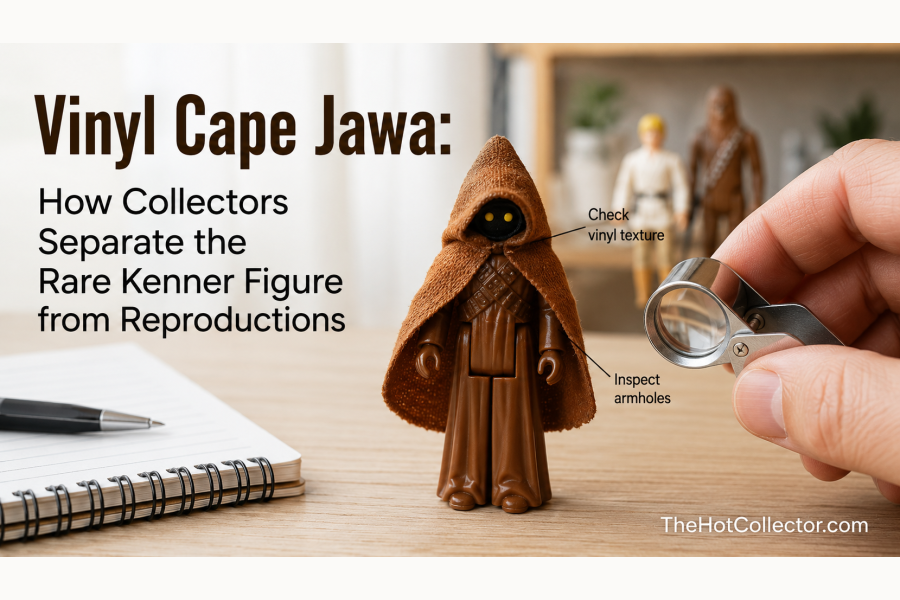
A tiny brown action figure standing barely taller than two inches does not look like the kind of toy that should make experienced collectors nervous. Yet place an alleged Vinyl Cape Jawa on a dealer’s table and people immediately begin studying it from every angle.
The reason is simple: the rare part is not really the figure.
It is the cape.
Kenner released its original Star Wars figures in 1978 following the enormous success of the first film. The company’s smaller figure scale made it practical to create ships, creatures, carrying cases, and playsets that all worked together. That connected toy world helped reshape action-figure collecting and encouraged children to build entire casts rather than settle for one large character.
The Jawa was part of that early universe. The first version wore a thin brown vinyl cape cut in a simple shape, but Kenner soon introduced a hooded cloth robe instead. The cloth version became the ordinary release seen in countless childhood collections, while the earlier vinyl-caped figure survived in much smaller numbers. Heritage Auctions describes the fabric cape as the replacement used for later Jawa versions in the original line.
That history creates the biggest authentication problem. The underlying Jawa figure is not necessarily rare by itself. Someone can take a common loose Jawa, add a reproduction vinyl cape, and suddenly present it as a much more valuable variation.
Collector’s Tip: treat the figure and cape as two separate collectibles until both have been examined.
Start with the cape’s material. Genuine examples are made from thin vinyl rather than fabric, but simply finding brown plastic proves very little. Reproduction capes can look convincing in online photographs. Collectors study the surface texture, flexibility, thickness, shape, arm openings, color, and the way the cape rests around the figure.
One side of an authentic cape may display a different texture from the other. That contrast is often discussed by collectors, but it should never be used as a single pass-or-fail test. Reproduction makers know which traits buyers search for and may attempt to copy them.
The armholes deserve close attention. Look for cuts that appear appropriate to the manufacturing process rather than freshly punched, stretched, or unevenly altered. Tiny tears around the openings may result from years of removal and handling. Large splits, however, can greatly affect desirability because the cape is the defining component of the variation.
Right now on eBay
Next, examine the figure itself. Check the copyright and country markings on the legs, but remember that authentic loose Jawa bodies were also sold with cloth robes. Correct markings can support the identification of a period figure, yet they cannot prove that the cape has always belonged with it.
Look Closely: compare the color of the figure and cape under neutral lighting. A seller’s warm lamp, dark background, or heavy photo editing can disguise differences. Request sharp photographs of the front, back, inside, armholes, lower edge, and both surfaces of the cape.
The original weapon matters as well. A complete Jawa should include its small blaster, and reproduction weapons are common throughout vintage action-figure collecting. Inspect the molding, shape, color, flexibility, and fine details against trusted original examples. A genuine figure with a reproduction weapon is still collectible, but it should not be advertised or priced as completely original.
Watch Out For: vague phrases such as “appears original,” “came from an old collection,” or “I am not an expert.” Those statements are not authentication. An honest seller should clearly explain what has been examined, provide detailed photographs, and allow questions about the cape, weapon, markings, and ownership history.
Carded examples introduce an entirely different level of inspection. Early Kenner packages displayed figures on cardbacks showing the first group of characters, commonly called 12-backs by collectors. With a packaged Jawa, buyers must study the card, bubble, seal, footer area, figure placement, and any signs that the package has been opened or resealed.
A clear bubble can still have cracks near the stem or lifting along the edges. A clean card can still be trimmed, recolored, pressed, or paired with a replacement bubble. Check for torn paper fibers around the seal, glue residue, unusual pressure marks, and differences in aging between the bubble and card.
Condition is especially tricky with a loose Vinyl Cape Jawa because ordinary handling can damage the rarest component. Creases, dents, discoloration, tears, and stretched armholes all matter. Collectors may accept moderate wear on a cape with convincing originality, but undisclosed repairs are a much bigger problem.
A repaired split may have been sealed with adhesive or reinforced from behind. Some capes have also been flattened, heated, or manipulated to improve their appearance. These treatments can be hard to detect in photographs, so expensive examples are best examined in person or purchased with strong authentication and a clear return policy.
Third-party grading can provide an additional opinion and protect the figure inside an acrylic case. Still, read the label carefully. Confirm whether the cape and weapon were judged original, note any qualifications, and verify the certification information. A grade should support careful buying—not replace it.
Why Collectors Care: the Vinyl Cape Jawa represents the wonderfully imperfect early days of Star Wars merchandising. Kenner was still deciding how these characters should look as toys, and a simple costume change created a variation collectors would chase decades later.
It also connects to a larger collecting moment. Kenner’s original figures turned background characters, droids, aliens, and villains into toys people wanted to own together. Museums now recognize the influence of that compact figure system and the vast play universe built around it.
The best Vinyl Cape Jawa is not automatically the cleanest one. It is the example with a convincing cape, correct figure, original accessories, believable wear, and enough documentation to make the buyer comfortable.
That little cape may look like a scrap of brown plastic, but in the world of vintage Star Wars toys, it is the difference between a common childhood figure and one of Kenner’s most famous treasures.