
Vintage Pedal Cars
Collector Quick Guide
What collectors look for
Collectors value pedal cars with original paint, factory decals, complete steering assemblies, and matching wheels. Models retaining their original pedals, windshield, and accessories are especially desirable.
How to identify originals
Authentic examples usually feature a manufacturer's badge or stamped identification, original welds, period hardware, and pressed-steel construction. Original paint often shows natural wear rather than a freshly restored appearance.
Red flags / reproductions
Watch for replacement wheels, reproduction decals, modern hardware, or heavily restored bodies that may hide rust or repairs. Some restored cars combine parts from multiple manufacturers.
Related collectibles
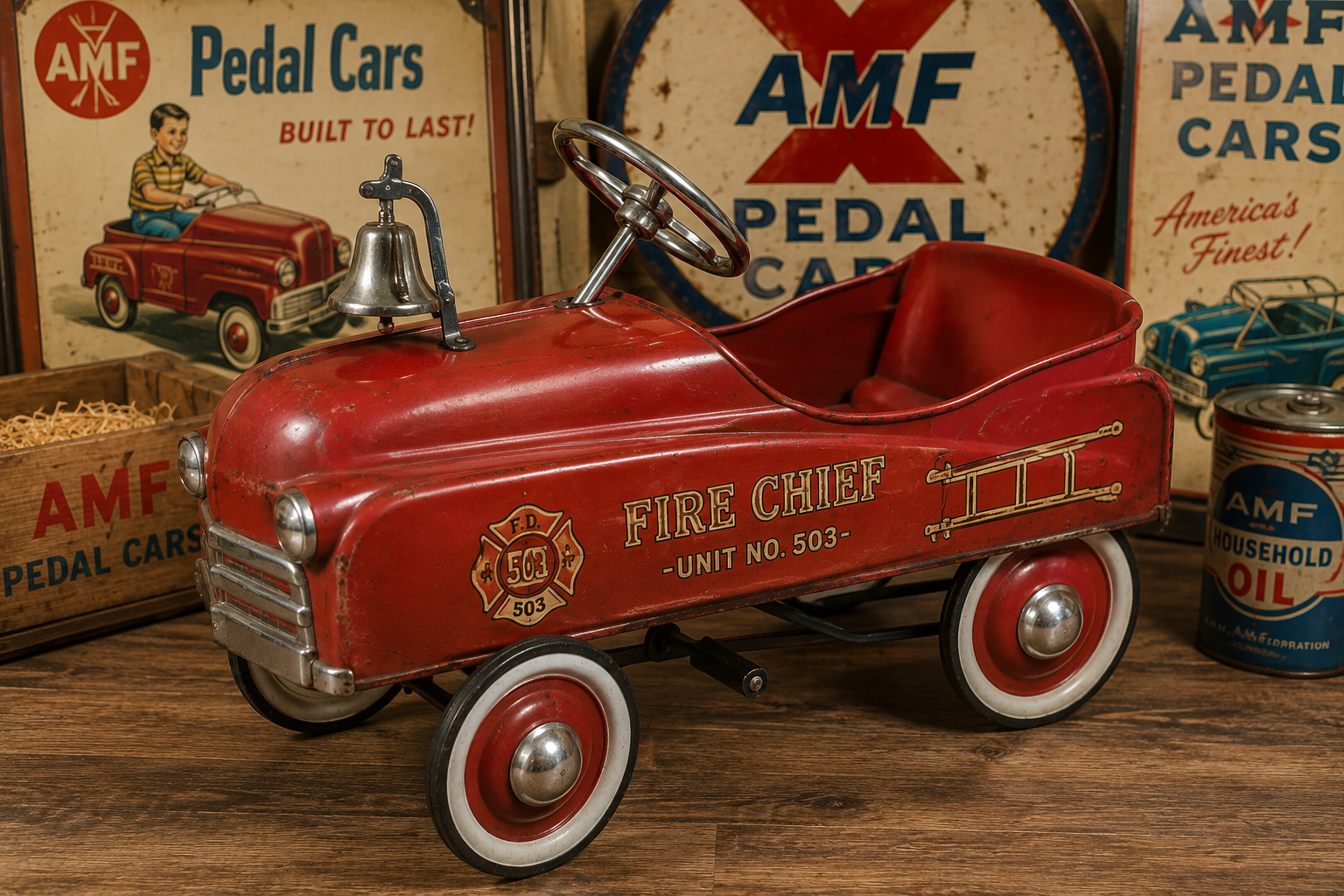
Long before battery-powered ride-on toys became common, children fueled their adventures with nothing more than their own imagination and a pair of pedals.  Vintage Pedal Cars became one of the most cherished toys of the twentieth century, giving generations of children their first taste of independence while introducing them to the excitement of the automobile. Built primarily from heavy-gauge pressed steel, these miniature vehicles reflected the styling of full-sized cars, trucks, fire engines, airplanes, and tractors, often incorporating chrome trim, rubber tires, working steering, and colorful graphics that mirrored the latest automotive trends.
The popularity of pedal cars surged during the 1920s and continued through the post-war boom of the 1950s, when companies such as Murray Ohio Manufacturing, AMF, Garton, Steelcraft, and Pontiac-based toy makers competed to produce increasingly realistic ride-on vehicles. Many children considered a pedal car to be one of the greatest gifts they could receive, and families often passed them down through multiple generations. Their sturdy construction allowed them to survive years of outdoor play, though many examples eventually showed the bumps, scrapes, and worn paint that tell the story of countless childhood adventures.
Today, vintage pedal cars remain highly sought after because they represent far more than toys. They capture an era when American manufacturing emphasized durability, imaginative play, and craftsmanship. Their bold colors, nostalgic styling, and connection to automotive history continue to attract collectors who appreciate both toys and transportation memorabilia.
Right now on eBay
One of the first things experienced collectors examine is originality. While restored pedal cars can make beautiful display pieces, many enthusiasts prefer examples that retain their original decals and factory paint, even if they show honest wear. Scratches, small dents, and faded finishes often tell a more authentic story than a flawless modern restoration. Original steering wheels, pedals, headlights, and hubcaps can significantly increase collector interest, especially on less common models.
Another important consideration is manufacturer identification. Companies frequently stamped their names into the body or attached small identification plates that help verify authenticity. Missing badges are common after decades of use, making surviving examples especially desirable. Collectors should also inspect welds, wheel assemblies, and body seams for evidence of replacement parts or repairs. It is not unusual to find pedal cars assembled from multiple donors, particularly popular models that have undergone extensive restoration.
Whether displayed in a toy museum, an automotive collection, or the corner of a vintage garage, pedal cars evoke memories of a simpler time when imagination powered every journey. Their enduring popularity reflects not only their craftsmanship but also the joy they brought to generations of children. As interest in vintage toys continues to grow, these miniature automobiles remain among the most iconic and recognizable ride-on collectibles ever produced.