
M1 Garand Rifle
Collector Quick Guide
What collectors look for
Original condition, age, maker marks, materials, completeness, unusual variants, and documented history usually matter most.
How to identify originals
Compare markings, construction details, finish, size, period-correct materials, and known design features before assuming authenticity.
Red flags / reproductions
Watch for reproductions, heavy restoration, replaced parts, fantasy pieces, unclear photos, and listings with vague descriptions.
Related collectibles
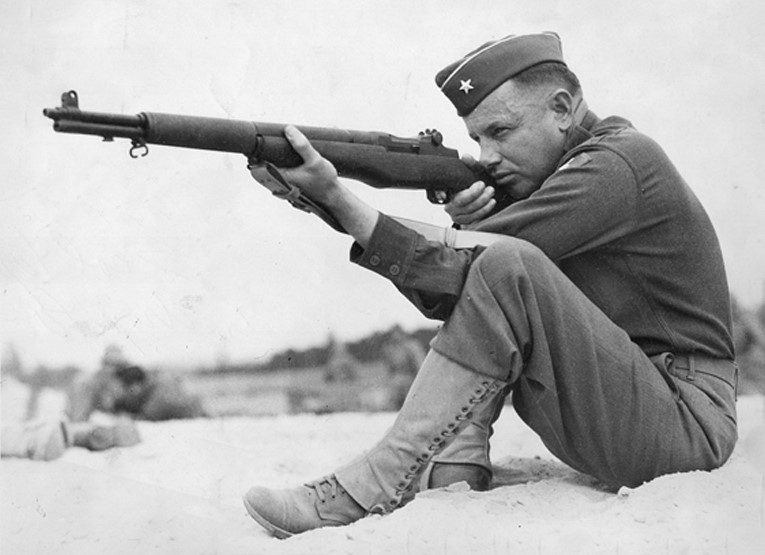
The M1 Garand Rifle, also known as the "Garand" or "M1," is a semi-automatic rifle that served as the standard-issue infantry rifle for the United States military during World War II and the Korean War. Designed by Canadian-American firearms designer John Garand, the M1 Garand was renowned for its reliability, accuracy, and robust construction. Introduced in the late 1930s, the M1 Garand replaced the bolt-action Springfield M1903 as the primary rifle for American soldiers. It was the first semi-automatic rifle to be adopted as a standard-issue infantry weapon by a major military power, revolutionizing infantry tactics and increasing the firepower of individual soldiers.
The M1 Garand rifles are highly sought after by firearms enthusiasts and collectors for their historical significance and iconic status. Collectors often seek out rifles with matching serial numbers, original parts, and documented military service history. Rare variations, such as those produced by specific manufacturers or featuring unique markings, can command premium prices among collectors. The M1 Garand holds a special place in the hearts of collectors due to its role in shaping the outcome of World War II and its association with the "Greatest Generation." Collectors are drawn to the rifle's rugged design, smooth operation, and the craftsmanship of its wartime production.
Right now on eBay
The collectibility of an M1 Garand rifle is influenced by factors such as its manufacturer, production year, condition, and provenance. Rifles produced by Springfield Armory or Winchester are particularly desirable among collectors, as are early production models with low serial numbers. Original military rifles with matching parts and minimal refurbishment are also prized by collectors. The M1 Garand underwent several modifications and updates throughout its service life, resulting in various models and variants. Notable examples include the M1C and M1D sniper rifles, which featured telescopic sights for precision shooting, and the M1E7 and T20 experimental models, which incorporated design changes and improvements.
Preserving the condition of an M1 Garand rifle requires proper storage, maintenance, and occasional cleaning to prevent corrosion and ensure its continued function. Collectors often consult with firearms experts or armorers to learn best practices for maintaining and caring for their rifles, ensuring they remain in optimal condition for future generations.