
Rickshaw
Collector Quick Guide
What collectors look for
Original condition, age, maker marks, materials, completeness, unusual variants, and documented history usually matter most.
How to identify originals
Compare markings, construction details, finish, size, period-correct materials, and known design features before assuming authenticity.
Red flags / reproductions
Watch for reproductions, heavy restoration, replaced parts, fantasy pieces, unclear photos, and listings with vague descriptions.
Related collectibles
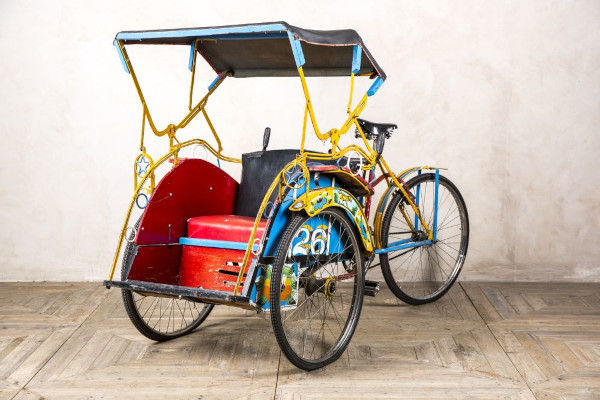
The rickshaw, a simple yet iconic mode of transportation, has a rich and varied history that stretches across continents and cultures. Originating in Japan in the late 19th century, the rickshaw quickly became a popular means of transport in many parts of Asia, particularly in China, India, and Southeast Asia. Over the decades, this humble vehicle has evolved from a hand-pulled cart to modern versions powered by bicycles or even motor engines, but its significance as a cultural and historical artifact remains deeply ingrained in the regions where it once thrived.
The traditional rickshaw, known as a "jinrikisha" in Japanese (which translates to "human-powered vehicle"), was first introduced in Tokyo in the 1870s. It was designed as a two-wheeled cart pulled by a person, typically a man, who would walk or run while transporting passengers seated in the back. Rickshaws provided a faster and more comfortable alternative to palanquins or sedan chairs, which required multiple carriers to lift and transport passengers.
As the popularity of rickshaws grew, they quickly spread to other parts of Asia. By the early 20th century, rickshaws were a common sight in cities like Shanghai, Calcutta (now Kolkata), and Rangoon (now Yangon). In these regions, rickshaws became an essential part of urban life, offering an affordable means of transportation for both locals and tourists. The rickshaw drivers, known as "pullers" or "wallahs," often belonged to the lower social classes, and their work was physically demanding and poorly paid. Despite this, the rickshaw industry became an integral part of the transportation infrastructure in many Asian cities.
The design of the traditional rickshaw was both practical and functional. It featured a lightweight frame made from bamboo, wood, or metal, with large, spoked wheels that allowed for smooth travel over uneven roads. The passenger compartment was usually open but could be covered with a canopy to protect against rain or sun. The puller would stand between the shafts at the front of the rickshaw, gripping the handles and pulling the vehicle forward. The simplicity of this design made it easy to produce and maintain, contributing to its widespread use.
Right now on eBay
As cities modernized and mechanized transportation became more common, the traditional hand-pulled rickshaw began to decline. In the mid-20th century, bicycle rickshaws, also known as "pedicabs" or "cycle rickshaws," began to replace the older hand-pulled versions. These new rickshaws were powered by a driver pedaling a bicycle attached to a passenger cart, which made the job less physically taxing and allowed for greater distances to be covered. Pedicabs became particularly popular in countries like India, Bangladesh, and the Philippines.
In some regions, motorized rickshaws, often called "auto rickshaws" or "tuk-tuks," further transformed this mode of transportation. Powered by small gasoline or electric engines, these modern rickshaws are faster and more efficient, making them a staple of urban transport in cities like Bangkok, Delhi, and Jakarta. Though the hand-pulled rickshaw has largely disappeared, its legacy endures in these modern iterations.
For collectors and transportation enthusiasts, vintage rickshaws represent a unique and fascinating piece of history. Antique hand-pulled rickshaws, especially those from the late 19th and early 20th centuries, are rare and highly valued for their craftsmanship and cultural significance. Restored or original rickshaws can be found in museums, private collections, or as decorative pieces in gardens or homes. Pedicabs and early motorized rickshaws are also sought after by collectors interested in the evolution of transportation.
The rickshaw is more than just a vehicle—it is a symbol of cultural exchange, urban development, and the changing landscape of transportation in the modern world. Whether viewed as a relic of the past or as a living tradition in certain parts of the world, the rickshaw remains an enduring icon of mobility and innovation.