
Chhakdo Rickshaw
Collector Quick Guide
What collectors look for
Original condition, age, maker marks, materials, completeness, unusual variants, and documented history usually matter most.
How to identify originals
Compare markings, construction details, finish, size, period-correct materials, and known design features before assuming authenticity.
Red flags / reproductions
Watch for reproductions, heavy restoration, replaced parts, fantasy pieces, unclear photos, and listings with vague descriptions.
Related collectibles
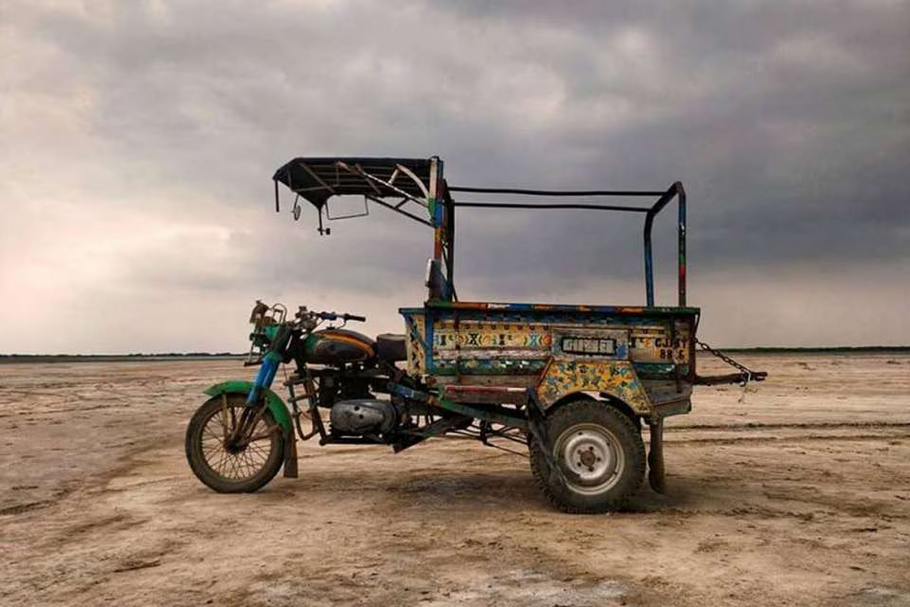
The Chhakdo rickshaw is a distinctive and versatile three-wheeled vehicle, primarily seen in the western regions of India, particularly in Gujarat. It is a hybrid of a rickshaw and a small motor vehicle, built to carry both passengers and cargo. This unique mode of transportation has become synonymous with rural and semi-urban transport in India, known for its adaptability, affordability, and ability to navigate rough roads and challenging terrains. The Chhakdo rickshaw serves as a lifeline for many communities, providing essential mobility in areas where conventional public transport is limited.
The origins of the Chhakdo rickshaw can be traced back to the need for an affordable and efficient means of transport in rural India. Traditional hand-pulled rickshaws and bicycle rickshaws were too labor-intensive and slow for longer distances and heavier loads. To meet the growing demand for a more powerful vehicle, local mechanics and craftsmen began modifying motorbikes and scooters, attaching a rear cart or seating area. The result was the Chhakdo rickshaw, a rugged vehicle designed to handle the demands of rural life.
Typically, a Chhakdo rickshaw consists of a motorized front section, usually a modified motorcycle or scooter engine, and a rear section designed to carry passengers or cargo. The vehicle runs on gasoline or diesel and can accommodate multiple passengers or large loads of goods. The chassis is often reinforced with metal or wooden panels, making it durable enough to carry everything from construction materials to agricultural products. The rear seating area is open or semi-enclosed, offering protection from the elements while allowing for maximum capacity.
One of the key features of the Chhakdo rickshaw is its versatility. In rural India, where paved roads are scarce and access to public transportation is limited, the Chhakdo excels. It is able to travel on uneven terrain, dirt roads, and through narrow village paths, making it an ideal choice for farmers, traders, and commuters. The vehicle is also used as a form of public transport, ferrying passengers between villages and towns. For many, the Chhakdo rickshaw represents a reliable and indispensable means of transportation.
Right now on eBay
The Chhakdo rickshaw is also highly economical. Its simple design and locally sourced parts make it affordable to both purchase and maintain. Mechanics across rural India are familiar with the vehicle’s construction and can easily repair or modify it as needed. This accessibility has contributed to its widespread use and popularity, particularly in regions where transportation costs need to be kept low.
While the Chhakdo rickshaw may lack the polished aesthetic of more modern vehicles, its rugged charm and practicality have earned it a place in the heart of rural India. In addition to being a workhorse for transportation, the Chhakdo is often customized by its owners. Colorful paint, decorations, and sometimes religious symbols adorn the vehicles, giving them a personal touch. In many ways, each Chhakdo rickshaw reflects the personality and creativity of its driver, adding to the vehicle’s cultural significance.
The Chhakdo rickshaw has become a symbol of ingenuity and adaptability in Indian transportation. Despite the rise of more modern vehicles, it continues to play a critical role in local economies, providing essential services to small businesses, farmers, and rural communities. For collectors and transportation enthusiasts, the Chhakdo represents an important chapter in the evolution of motorized rickshaws, standing as a testament to the resourcefulness and innovation of rural India.
In recent years, the Chhakdo rickshaw has also garnered interest as a subject of research in sustainable and accessible transport solutions. Its low cost, low fuel consumption, and ability to serve as a multi-functional vehicle make it an intriguing model for other regions facing similar transportation challenges. As urbanization and modernization spread, the future of the Chhakdo rickshaw remains uncertain, but its legacy as a vital means of rural transport is undeniable.